

Investing in TakeMe2Space: Democratizing Space Access
How TakeMe2Space is building the “Cloud Computing” layer for orbit to make Earth Observation accessible to everyone.
Aman Raj and Ranjith Menon
Jan 08, 2026
The space economy is witnessing a pivotal shift, yet the barriers to entry remain astronomically high. While launch costs have plummeting down thanks to launch vehicle players, the actual utility of space – specifically Earth Observation data – remains the exclusive domain of governments and massive corporations. A typical organization wanting satellite data today faces a binary choice: pay exorbitant fees for stale, generic imagery from aggregators, or spend millions in CapEx to build and launch their own satellite constellation.
The economics of the current model are fundamentally broken for the modern age. Traditional satellite operators function like mainframe providers in the 1970s: they sell rigid, expensive assets or raw data dumps. This legacy approach ignores the reality that most businesses don’t need a satellite; they need answers from space and they need them in real-time.
When we see enterprises forced to wait days for critical geospatial insights or priced out of orbit entirely, we know the infrastructure layer is missing. This isn’t just a hardware problem; it’s an access problem that demands a complete reimagining of how we interact with orbital assets.
The Downlink Bottleneck
Consider the current workflow for acquiring space data: a satellite captures an image, stores it onboard, and waits, sometimes for hours, until it passes over a specific ground station to downlink the massive raw file. Only then can the data be processed and analyzed on Earth.
This “store-and-dump” architecture creates a massive latency gap. In a world demanding real-time decision-making from monitoring crop health to tracking maritime assets this delay renders the data nearly useless by the time it arrives. Furthermore, the cost of downlinking terabytes of raw pixel data is staggering. It is the equivalent of shipping a hard drive across the country just to check one file. For a startup or research institution, this bottleneck turns a powerful tool into an inaccessible luxury.
This inefficiency resonated with us. We saw a clear parallel to the pre-cloud era of computing, where infrastructure heavily limited innovation.
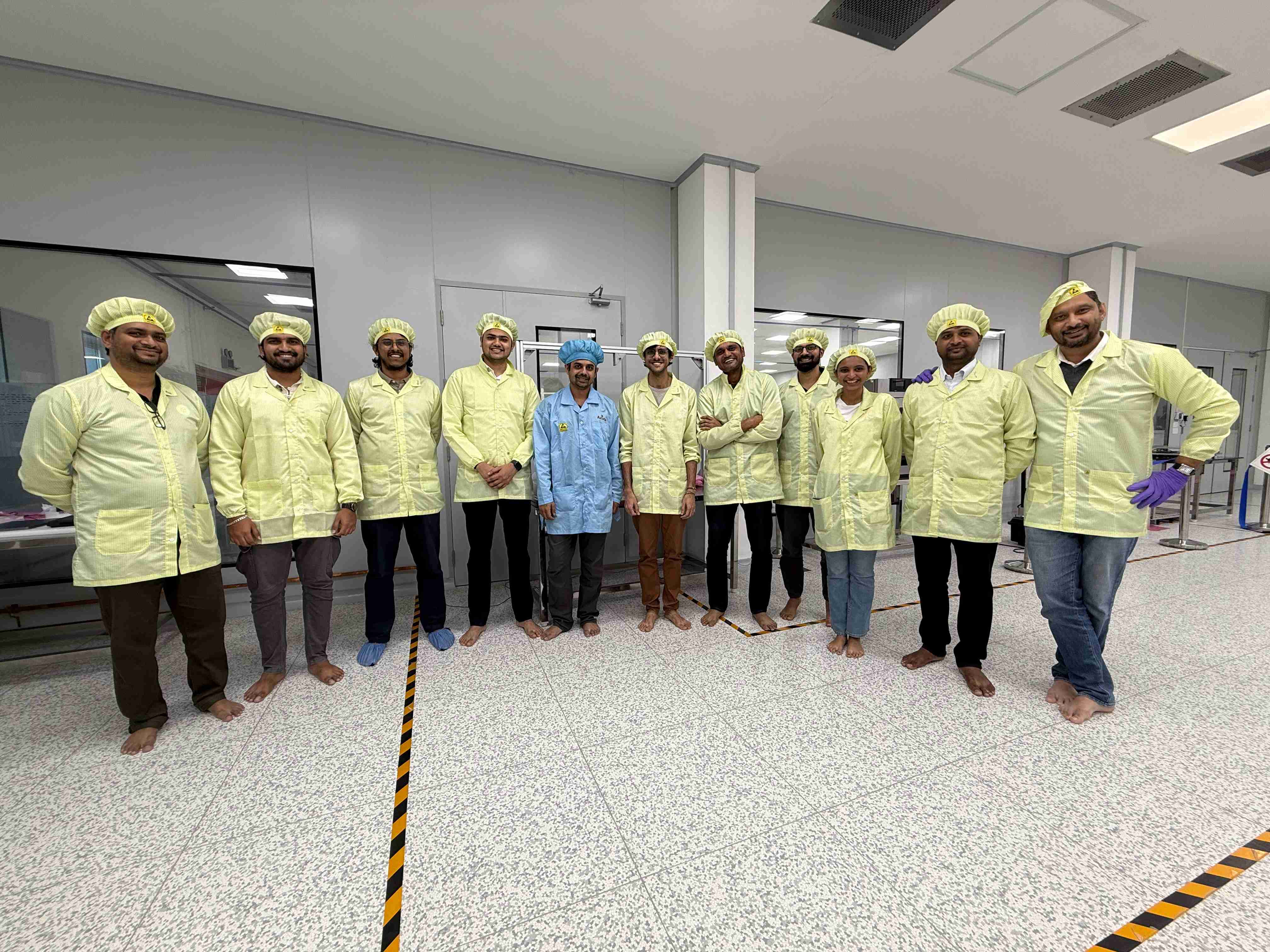
When we met Ronak and his team, we knew we were talking to someone who understood this friction intimately. Ronak is a seasoned entrepreneur who previously co-founded NowFloats (acquired by Reliance), bringing 15 years of experience in scaling software and frontier tech. He is joined by Anand Rajagopalan (ex-CEO of T-Works), Sharat Kamidi, and Firoz Ahammad, a team with deep roots in rapid prototyping and manufacturing.
Unlike traditional space companies that spend years in R&D before cutting metal, this team operates with a “build-first” philosophy. They have already developed 15+ satellite modules in-house and successfully launched two missions in 2024 to space-qualify their technology. Their insight was simple but profound: instead of selling satellites or raw data, why not sell time in orbit?
The Shared Infrastructure Revolution
TakeMe2Space is pioneering the “Fractional Ownership” model for orbit. Their innovation is to treat satellites as shared, programmable infrastructure. Instead of buying a satellite, customers can purchase “satellite time” for as low as $2 per minute.
This approach allows clients to task a satellite to capture specific data and crucially run their own algorithms directly on the satellite. By enabling in-space edge computing, TM2S allows customers to process data in orbit and downlink only the insights (e.g., “3 ships detected”) rather than the massive raw image files.
The efficiency gains are transformative. By distributing the cost of the constellation across multiple “tenants,” TM2S dramatically lowers the entry barrier. A customer can now own a virtual slice of a satellite constellation, achieving the control of ownership without the operational nightmare or capital expenditure.
Three powerful forces are converging to create an unprecedented window for TakeMe2Space’s approach:
- The Rise of Edge AI in Orbit: The demand for real-time intelligence is outstripping the capacity of ground-based processing. AI models have become efficient enough to run on nanosatellites, allowing for “smart” observation where satellites filter and analyze data before it ever hits the ground. TM2S is building the infrastructure to host these models natively in space.
- The Shift from CaPex to Opex: Just as cloud computing allowed companies to rent servers instead of building data centers, the space industry is moving toward “Satellite-Time-as-a-Service.” Organizations want to expense a monthly subscription for orbital access, not amortize a $10M satellite launch over five years. The TM2S fractional model fits perfectly into this modern procurement mindset.
- Space Hardware: The components required to build capable nanosatellites have become standardized and affordable. By building 15 core subsystems in-house like power storage & distribution, Orientation control and guidance, On-board computer, etc. TM2S has vertically integrated the stack, allowing them to iterate faster and control costs better than integrators who rely on expensive third-party parts.
The Cloud Computing Moment for Space
We expect TakeMe2Space to trigger a massive expansion in the Earth Observation market, similar to how cloud-service providers expanded the software market. By reducing the cost of access to near-zero and offering a simple API-like experience for tasking satellites, they will unlock demand from sectors that never previously considered space data viable from hyper-local agriculture to autonomous supply chain monitoring.
While they start with Earth Observation, their vision extends to establishing large-scale on-orbit data centers. They are effectively building the orbital compute layer that will power the next generation of space applications.
Our Conviction
We are backing TakeMe2Space because they are solving the single biggest bottleneck in the Earth Observation market: access. Their fractional ownership model disrupts the rigid economics of the industry, offering a “best of both worlds” solution that combines the customization of ownership with the flexibility of a service.
We are excited to partner with Ronak and the entire team and lead their $5M seed round as they democratize the final frontier and bring the agility of software to the hardware of orbit.