

The Untapped Potential: Why India's Physiotherapy Revolution is Just Beginning
Naimil Shah
May 28, 2025
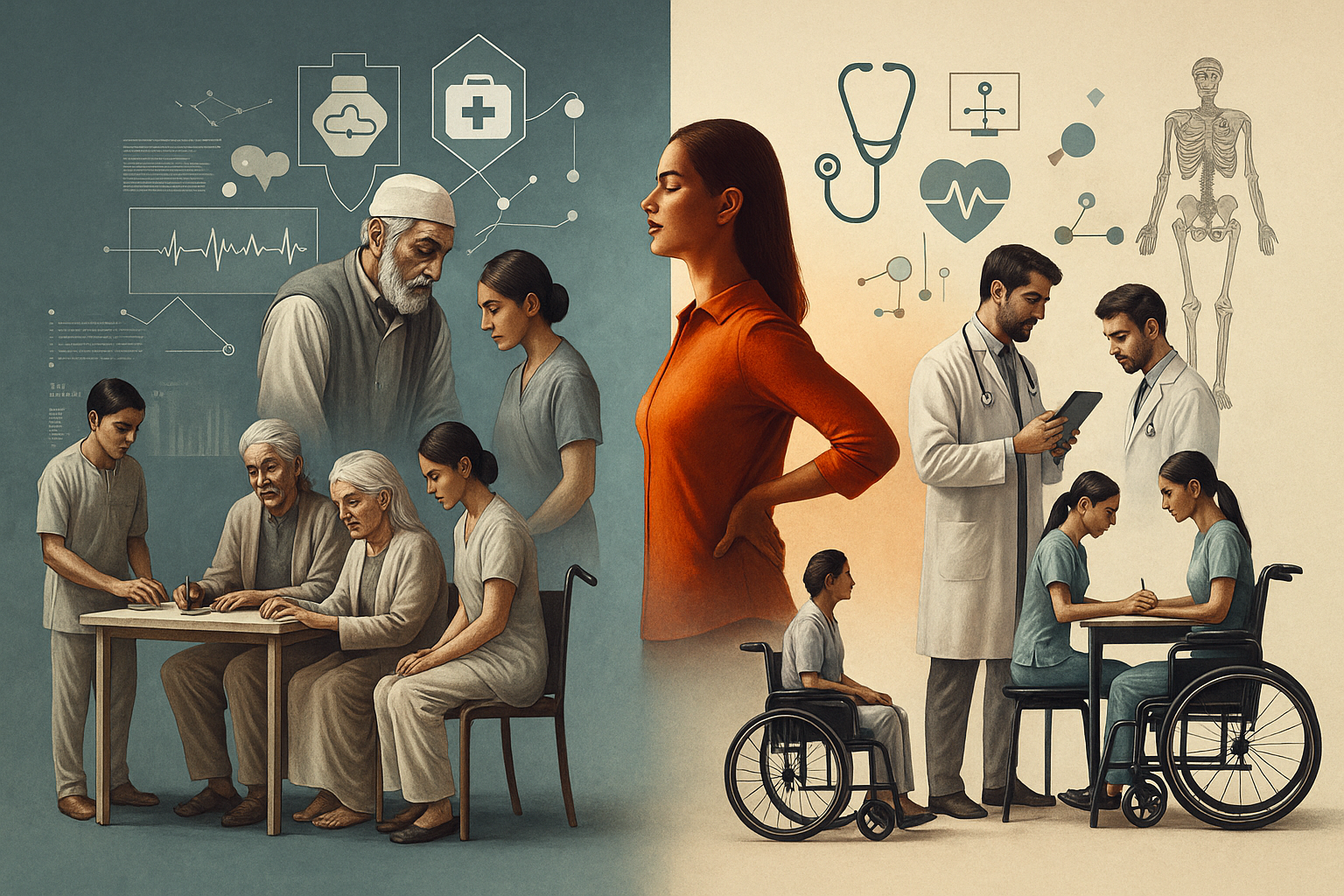
A silent epidemic affects nearly 35-40 crore Indians today—chronic musculoskeletal pain that limits mobility, reduces productivity, and diminishes quality of life. Yet unlike many healthcare challenges, this one remains largely unsolved, creating a remarkable opportunity for founders with vision and determination.
The numbers tell part of the story. India’s physiotherapy market, valued at $1 billion in 2022, is projected to more than double to $1.9 billion by 2030, growing at a CAGR of 8.85%. The digital MSK segment is expanding even faster, with growth rates as high as 23.5% CAGR from 2025 to 2032, potentially reaching $750 million by 2032.
But raw market size only hints at the real opportunity. The true potential lies in the confluence of three powerful forces creating a perfect moment for innovation in this space.
The Perfect Storm
First, India faces a critical shortage of qualified physiotherapists—just 0.6 per 10,000 people compared to the WHO’s recommended minimum of 1.0. For USA the numbers is approximately 7.2 per 10,000 people. This gap won’t be closed through traditional means alone, creating space for technology-enabled solutions that extend the reach of existing professionals.
Second, consumer readiness has reached a tipping point. India leads globally in health app usage with 69% of the population using health applications (compared to 61% in China). The healthcare apps market in India is projected to grow from INR 27.01 billion in 2018 to INR 138 billion by 2024, at a CAGR of ~31.61%.
Finally, the market remains remarkably fragmented. Despite the size of the opportunity, no clear category leader has emerged. Most consumers are served by independent practitioners or small clinics with limited capacity to innovate or scale. The field is wide open for founders to define what the future of physiotherapy in India looks like.
At Chiratae Ventures, we’ve witnessed firsthand the transformative potential of healthcare innovation through our investments in companies like HealthifyMe (personalized health coaching), Cult.fit (fitness and wellness), and Healthplix (digital health records for doctors). The physiotherapy and MSK care space represents exactly the kind of opportunity we get excited about a massive underserved market where technology can democratize access to quality care while creating sustainable, scalable business models.
The Spaces Where opportunities exist
As we look at the landscape, six distinct opportunity spaces emerge for founders ready to build the next generation of MSK care solutions in India.1. AI-Powered Analysis Platforms
The traditional approach to physiotherapy assessment requires in-person sessions with specialists who are already in critically short supply across India. Millions of patients struggle with proper form during home exercises or tracking the improvement in movement over the course of a treatment. This reduces effectiveness and potentially causing new injuries when practicing without guidance.
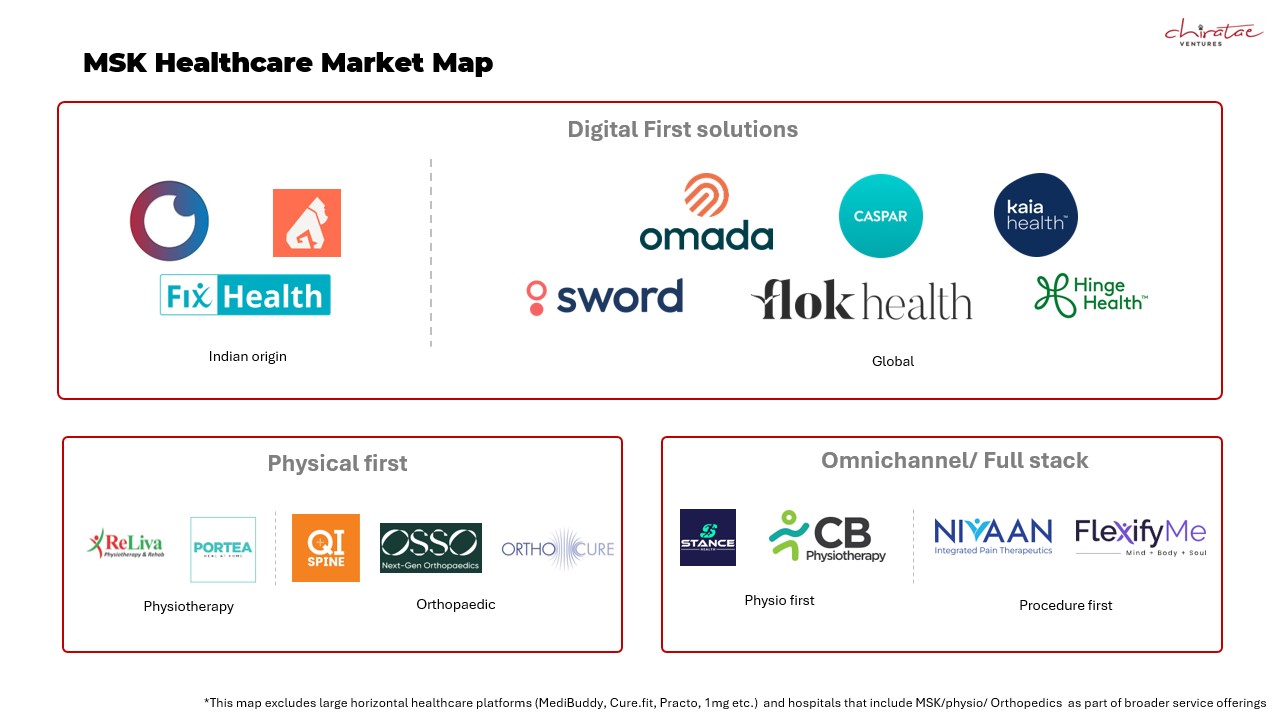
Companies are already demonstrating the transformative potential of AI in this space. FlexifyMe uses AI-powered scanning and improvement tracking as part of their full-stack MSK solution. Their approach of serving both consumers directly via phones and also in their centres for a uniform evaluation and recording experience.
The ubiquity of smartphones in India can help solve this problem through accessible AI-powered analysis that can guide patients without specialized hardware.
We think the opportunity lies in building proprietary algorithms and creating interfaces that work for individuals or establishments making access to reliable tracking easy and accurate.
2. Global Telerehabilitation Services: Built in India, for the World
While India’s domestic market presents enormous opportunities, an equally compelling opportunity exists in leveraging India’s talent, cost advantages, and digital infrastructure to serve the global MSK market. The worldwide demand for physiotherapy far exceeds supply, with waiting times for specialist care stretching to weeks or months in many developed countries, while costs can be prohibitive for many patients.
Fix Health exemplifies this global-first approach, positioning itself as “India’s #1 Trusted Online Physiotherapy Service” while targeting international markets. The success of global leaders like Kaia Health (USA) with their digital therapeutics for MSK pain, Hinge Health (USA) with their sensor-guided exercise therapy achieving massive enterprise adoption, and Caspar Health (Germany) with their comprehensive digital rehabilitation services demonstrates the enormous scale possible when AI-powered physiotherapy platforms cross borders successfully.
India’s 30-35% cost advantage in qualified healthcare professionals creates a powerful economic opportunity. A physiotherapy session in the US typically costs $75-150, while Indian practitioners can provide comparable quality care at a fraction of the cost. This price differential, combined with the global shortage of physiotherapists, creates a compelling case for cross-border telerehabilitation services.
For founders, the opportunity involves building platforms that connect Indian physiotherapists with global patients, developing specialized expertise in treating conditions common in Western markets, and creating service models that overcome time zone and cultural differences. The founder who cracks the international telerehabilitation model won’t just tap into a larger market—they’ll position India as a global leader in digital health services export
3. Geriatric-Focused Digital Physiotherapy
India’s elderly population is growing rapidly (decadal growth rate of 41%) and faces unique MSK challenges that general solutions don’t adequately address. Mobility limitations make clinic visits difficult, while historical technology barriers can make digital solutions inaccessible. Yet this demographic has both the highest need and the greatest potential lifetime value for physiotherapy services.India’s elderly segment is now the largest share of market and ageing population makes it a fast growing one. We believe the opportunity is to build specialized interfaces that overcome technology barriers for older adults, create content specifically addressing age-related MSK conditions, and build family-inclusive models that enable loved ones to participate in the care journey. The opportunity extends beyond direct-to-consumer approaches to include care facilities, retirement communities, and healthcare systems seeking better solutions for their aging patients.
4. Hybrid Care Model Expansion
The physiotherapy market has historically been split between pure digital and pure physical models, but evidence increasingly shows that neither approach alone delivers optimal results for patients. While digital solutions offer convenience and accessibility, many patients still need personal touchpoints for initial assessment, complex issues, and accountability.
This gap has created a perfect opportunity for hybrid approaches that blend the best of both worlds.
The market is especially ripe for expansion in Tier II cities where quality physiotherapy remains scarce but digital adoption is growing rapidly. Innovative approaches include “shop-in-shop” partnerships with existing orthopaedic centers (using a revenue share model) and technology platforms that connect offline assessments with digital follow-up care. The founder who builds the right balance between physical touchpoints and digital scale can create a new category leader in Indian physiotherapy.
5. Workplace MSK Prevention Platforms
India’s growing corporate workforce is experiencing an epidemic of MSK issues driven by increasingly sedentary work environments. Daily steps have plummeted from an average of 5,000 to just 1,800 for many office workers, while stress-related tension compounds the physical toll of desk work. These issues reduce productivity, increase absenteeism, and create substantial healthcare costs for both individuals and employers.Corporate awareness about wellness and productivity and increasing insurance penetration of formally employed people is at an all-time high, creating an interesting opportunity for B2B solutions focused on prevention rather than treatment.
Globally we have seen that for countries with high levels of insurance penetration prevention becomes a key part of keeping overall health costs in control. On a limited but quickly growing scale, we see this replicate across formally employed in Tier 1 and Metros and this could give rise to interesting product + services solutions.
6. Rural Telerehabilitation Networks
Perhaps no opportunity in this space has greater potential impact than extending quality MSK care to India’s vastly underserved rural population. Despite high prevalence of MSK conditions exacerbated by physical labor, rural Indians have almost no access to qualified physiotherapists. Yet these communities represent more than half the country’s population and suffer disproportionately from preventable and treatable MSK issues.What makes this opportunity uniquely timely is the digital foundation that now exists in rural India. Over half of India’s 820 million internet users are in rural areas, creating unprecedented connectivity to previously unreachable populations. Government initiatives like the National Digital Health Mission are accelerating digital health adoption in rural regions, building infrastructure that innovative companies can leverage.
The founder who cracks this challenge—creating low-bandwidth solutions with regional language support and integration with existing community health workers—won’t just build a successful company; they’ll fundamentally transform access to care for hundreds of millions.
The Road Ahead
The convergence of these factors—massive unmet need, consumer readiness, technological capability, and market fragmentation—creates a rare opportunity for founders to build category-defining companies in a space that touches hundreds of millions of lives.
The most successful ventures will likely combine deep clinical understanding with technological innovation and business models specifically tailored to India’s unique dynamics. The winners won’t simply digitize existing services—they’ll fundamentally reinvent what physiotherapy means in the Indian context.
For founders with vision and execution ability, few spaces offer more potential for both significant financial returns and meaningful impact. The future of physiotherapy in India is still being written—and the next chapter belongs to those bold enough to pick up the pen.